Raising Children with Intention
What we pass on is not limited to what we say. It is shaped far more quietly and consistently by what we carry, how we carry it, and what we model. Modeling behavior for children is crucial, as they do not learn solely from instruction; they learn from what they observe, absorb, and come to understand as normal. Whether we realize it or not, they inherit more than guidance. They inherit our patterns, our assumptions, and our unexamined beliefs about roles, responsibilities, and what it means to belong in the world.
We are raising children with intention during a time where many of those assumptions are shifting, often rapidly and without clarity, leaving both adults and children trying to make sense of expectations that no longer feel steady or shared. Some of that change reflects growth, while some reflects a necessary correction. Much of it unfolds without the reflection needed to ask what should be carried forward and what should be set down, so we often continue, unconsciously, to pass along what we ourselves were given.
Raising well requires the willingness to examine not only what we are teaching but also what we are demonstrating through our own lives. It asks us to reflect on what we take responsibility for, what we avoid, what we over-carry, and what we quietly expect others to hold. Responsibility in parenting is essential because children do not benefit from a world where responsibility is unevenly carried. They do not benefit from confusion about what is expected of them. They do not benefit from a reactive, rather than thoughtful, constant redefinition of roles.
What they benefit from is clarity, consistency, and an understanding that responsibility, dignity, and accountability are not assigned based on identity or role but are shared as part of being human. This does not mean returning to rigid definitions or outdated expectations. It means redefining success not as control, achievement, or performance, but as how well we prepare the next generation to live with others, with awareness, respect, and a willingness to carry their part without expecting others to carry it for them.
That work does not begin with children; it begins with us. This work starts with recognizing that we cannot ask for balance if we continue to model imbalance, that we cannot expect clarity if we operate from confusion, and that we cannot teach responsibility if we are unwilling to examine how we have distributed it in our own lives.
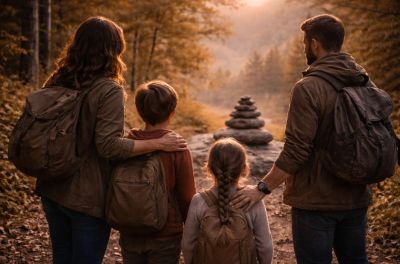
A cairn is built carefully, not by placing every stone we can find and not by leaving it for someone else to finish, but by choosing what belongs, what holds, and what creates something steady enough for others to recognize and trust. Raising well is no different. It is not about doing more; it is about carrying what is yours and allowing others to carry what is theirs. It is about modeling what it looks like to live with intention rather than expectation. It is about understanding that what we build now, in the quiet, often unseen moments of daily life, will shape far more than we can measure in the moment.
Children are not only learning how to live; they are learning how to carry. What they carry forward will depend, in part, on what we choose to hold and what we finally decide to set down.